Okay, real talk. You've heard the word “hackathon” thrown around in your group chat, seen a poster on your notice board, or watched a senior post about “winning” one on LinkedIn, and you're still not 100% sure what it actually is. Is it a coding test? A competition? Do you need to be some genius programmer even to show up?
Nope. Not even close. And honestly, that confusion is exactly why you're here, so let's clear it up properly. By the time you finish reading this, you'll know exactly what a hackathon is, why people (including students who “can't code”) show up for them, what actually happens once you're in the room, and what you walk away with besides a certificate. No jargon, no gatekeeping, just a straight answer to “what is a hackathon” from someone who's actually broken it down for you.
Key Takeaways
A hackathon is a short, time-boxed event where teams build a working project from scratch, not a coding exam.
You don't need to be a coder to join. Teams need designers, presenters, and idea people too.
The real value isn't the prize. It's the skills, the network, and the story you walk away with.
Knowing what happens before, during, and after a hackathon makes your first one far less intimidating
What is a Hackathon?
Let's start simple. A hackathon is a short event, usually anywhere from a few hours to a full weekend, where you and a small team build something from scratch. It could be an app, a website, a bot, or even a hardware gadget. At the end, you present what you built to a panel of judges.
That's genuinely it. Strip away all the buzzwords, and a hackathon is just a sprint. You get a problem or theme, a deadline, and a few teammates, and you figure the rest out as you go.
Most people get this wrong: a hackathon isn't a test of who already knows the most. It's closer to a group project with a countdown timer, except way more fun, and with actual people cheering you on instead of a professor grading silently.
Why Should You Attend a Hackathon?
This is probably the question actually running through your head right now. “Okay, cool, but why should I bother?”
Here is the honest answer: it's one of the fastest ways to learn by doing. You can read tutorials for months and still freeze up when it's time to build something real.
A hackathon forces you to build under pressure, with a deadline that doesn't care whether you're ready.
You should consider attending if:
You're curious but haven't built anything real yet. A hackathon gives you a low-stakes reason to finally try.
You want something solid for your resume. “Built and presented a working prototype” hits different than “completed an online course.”
You want to meet people outside your own college bubble. Hackathons pull in students, mentors, and recruiters you'd never bump into otherwise.
You're not sure what you're good at yet. You might discover you're a much better presenter than coder, or vice versa. That's genuinely useful self-knowledge.
If none of that convinces you, here's the blunt version: it's one weekend. Worst case, you learn something. Best case, it changes what you do next.
And if you're the kind of person who overthinks decisions like this, here's a simpler way to look at it: you're not signing up to be perfect. You're signing up to try. Most people who end up loving hackathons started exactly as unsure as you are right now.
What Happens in a Hackathon?
Let's walk through it so you're not going in blind.
Before the event, you'll usually register, sometimes solo, sometimes with a team already picked. If you don't have a team, don't panic. Most hackathons let you form one on the spot through a Discord server or an on-site mixer. You can register through event platforms like AllCollegeEvent.
On the day, you'll get the theme or problem statement. This is your starting gun. Your team huddles up, throws around ideas, and picks one to actually build, ideally something small enough to finish, not something so ambitious it collapses by hour 10.
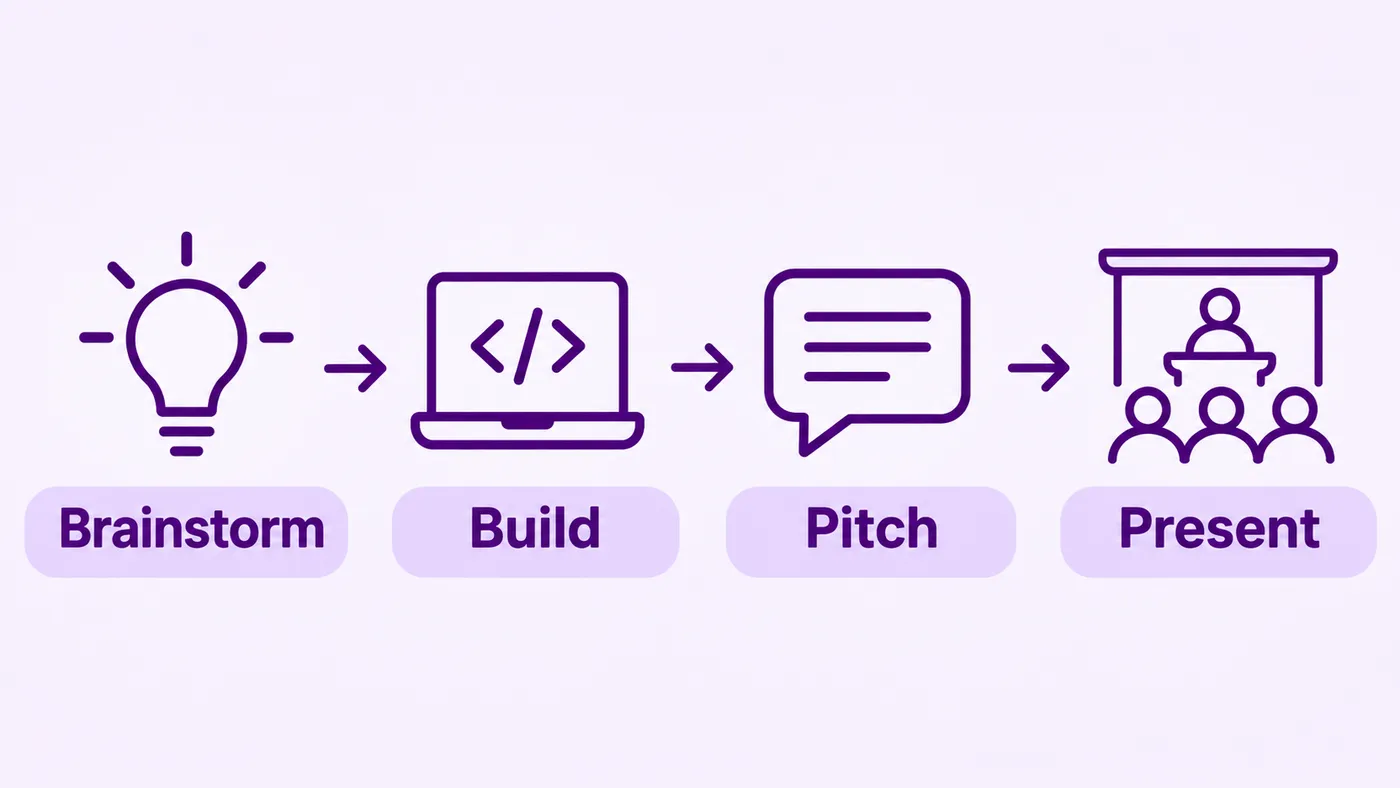
Here's roughly how a typical hackathon day flows:
| Time | What's Happening |
| First hour | Understand the problem statement, brainstorm with your team |
| Next few hours | Pick one idea, divide roles, start building |
| Middle stretch | Heads-down building, testing, fixing what breaks |
| Final few hours | Polish the demo, prep your pitch, rehearse |
| Last slot | Present to the judges, answer their questions |
Along the way, you'll usually have mentors walking around, industry folks or seniors who've done this before, checking in on teams and helping unstick anyone who's stuck. Don't be shy about flagging them down. Five minutes with a mentor can save you an hour of frustrated Googling.
Once presentations wrap up, judges deliberate, and winners get announced. But here's the thing nobody tells you upfront: the event technically ends there, but the value doesn't. What you do in the days right after, following up with people you met, polishing your project, matters just as much.
Why Hackathons Actually Matter
So why do hackathons matter beyond “it's a fun weekend”? A few real reasons:
They teach you things classrooms don't. You learn how to work under a deadline, split tasks with people you just met, and explain something complicated in under three minutes. None of that fits neatly into a syllabus.
They're a reality check. You find out fast whether an idea you thought was brilliant actually works when you try to build it. That kind of feedback loop is rare in regular coursework.
They open doors you didn't know existed. Mentors, recruiters, and fellow students you meet at a hackathon often turn into internship leads, collaborators, or just genuinely useful contacts later.
This is really the core of hackathon importance. It's not about the trophy. It's about compressing months of “figuring things out” into one weekend.
Hackathon Benefits for Students, Specifically
If you're a student, the benefits hit a little differently than they would for, say, a working professional.
You get real project experience before you have real work experience. That's huge when every internship application asks for “projects you've built.”
You build confidence talking about your work. Presenting to judges is basically interview practice in disguise.
You find your people. Hackathons are full of students who actually care about building things, which is a nice change from group projects where you're doing all the work alone.
You get comfortable with uncertainty. Nobody hands you a clear syllabus at a hackathon. You learn to figure things out as you go, which, honestly, is most of what a real job looks like.
And here's a bonus most students don't think about: hackathons are one of the few places where a first-year and a final-year student can genuinely be on the same team, learning from each other in real time.
A Quick Hackathon Guide for First-Timers
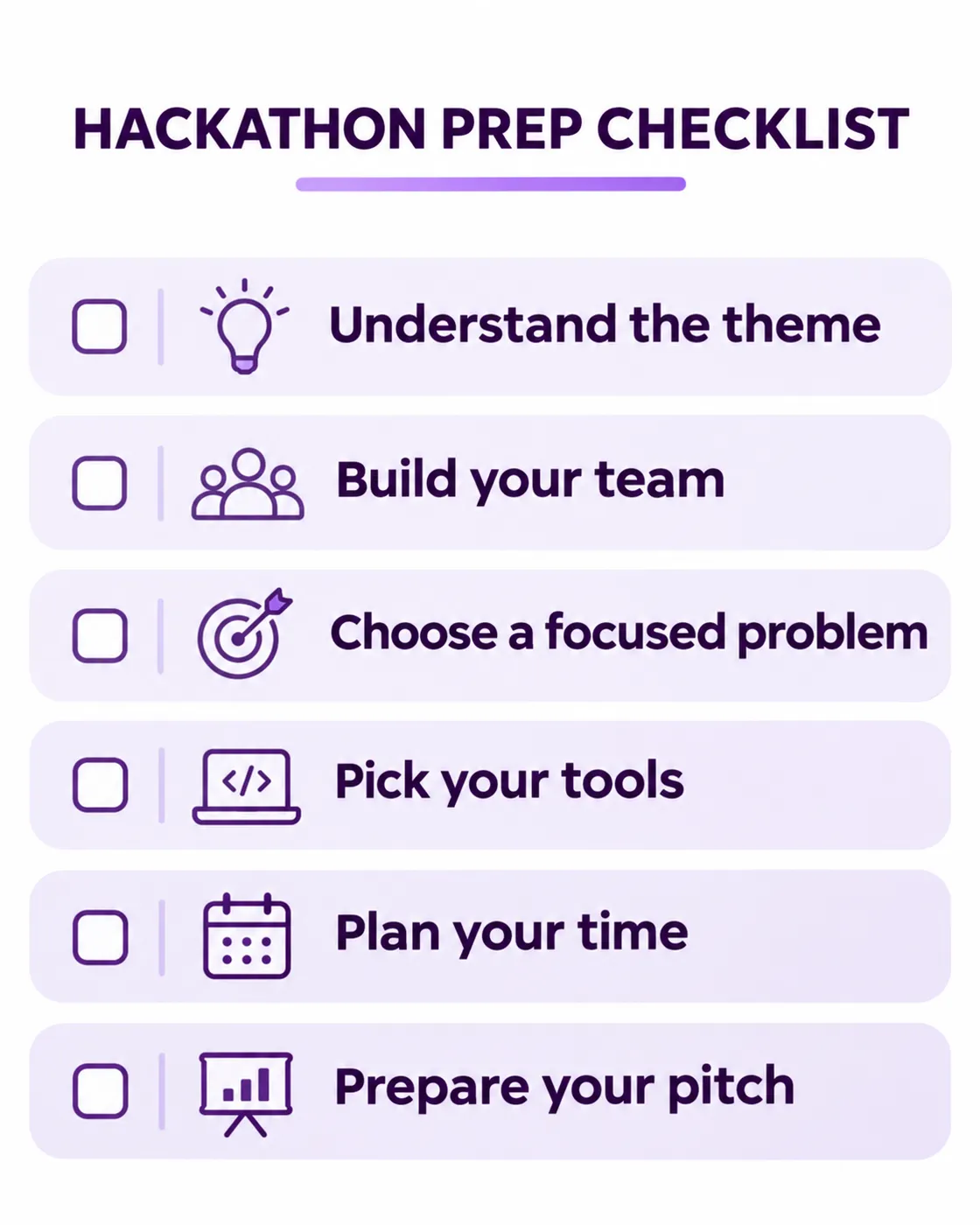
If you're about to sign up for your first one, here's a no-nonsense complete guide to hackathons:
Pick a hackathon that fits your comfort level. If it's your first, look for ones explicitly welcoming beginners.
Find your team, or don't. Going solo and forming a team on the day is completely normal.
Set up your laptop and tools in advance. Code editor, GitHub account, design tools, whatever your role needs.
Keep your idea small. A simple project that actually works beats an ambitious one that doesn't.
Rehearse your pitch. A confident 3-minute explanation matters more than people expect.
Follow up after. Message the people you met within a day or two, while it's still fresh.
Want the full breakdown, team roles, a 24-hour timeline, and how to eventually judge one? Check out our Complete Guide to Hackathons for the step-by-step version.
This applies whether you're eyeing coding hackathons specifically or something broader like a design or business-case hackathon. The prep logic barely changes.
One more thing worth saying out loud: you don't need permission to join. You don't need a portfolio, a certification, or a senior vouching for you. Hackathon participation is genuinely as open as “read the eligibility page, register, and show up.”
What Do You Actually Get From Attending a Hackathon?
Let's cut through the hype and get specific about what you walk away with.
A real project you can talk about in interviews, not just describe, but actually show
New skills, sometimes technical, sometimes soft skills like pitching and teamwork
A small but real network of mentors and fellow builders
Clarity about what kind of work you actually enjoy, which is worth more than people realize at your stage
A story. “Tell me about a time you worked under pressure” becomes a lot easier to answer once you've survived a 24-hour build
Certificates or prizes will be given even for participation.
Notice none of that requires you to have won anything. Winning is a nice bonus. The actual value is baked into just showing up and participating properly.
Conclusion
So, what is a hackathon, really? It's not a scary coding exam, and it's definitely not just for the “genius” crowd. It's a short, intense, genuinely fun sprint where you build something real, meet people who care about the same things you do, and walk away with more than you expected going in.
If you've been on the fence about joining one, consider this your nudge. You don't need to feel “ready.” You just need to show up.
Explore beginner-friendly hackathons by theme, format, and location on AllCollegeEvent.com, and pick your first one this week.
Ready to Join Your Next College Fest?
Discover upcoming technical, cultural, sports and workshop events near you.
Explore Events Now