
Somewhere on your campus right now, a student is doing something interesting. They get event passes before anyone else, they know people at companies most students only apply to, and their name appears on posters next to brand logos. Ask what they do, and the answer is two words: campus ambassador.
And then the doubts start. Is it a real role or just free marketing labour? Does it actually help a career, or does it just fill Instagram stories? And the question this guide exists to answer - how to become a campus ambassador when every program seems to pick someone else?
The honest answers: it can be a genuinely career-shaping role, it can also be unpaid spam-forwarding dressed up with a fancy title, and the difference lies entirely in which program you join and how you work it. We have already covered how internships convert into careers - the campus ambassador role is its on-campus cousin, with its own skills, its own benefits, and its own traps.
This guide walks through all of it - what real programs involve, the skills you build, the application process, and the career impact years later.
So, a quick question before we begin - do you actually know what the ambassadors on your campus do, or only what their posters say?

What Is a Campus Ambassador Program?
A campus ambassador program is a structured arrangement where a company, startup, or platform appoints a student as its official representative inside a college. The ambassador promotes the organisation's events and products on campus, gathers feedback from students, and acts as the bridge between the brand and the campus community.
What the role typically involves:
Promotion with a face. Sharing opportunities, organising info sessions, and answering classmates' questions - a trusted peer instead of an anonymous advertisement.
Event execution. Helping run webinars, workshops, contests, and campus drives for the organisation - often your first taste of real event management.
Feedback and reporting. Telling the company what students actually think, usually through simple weekly or monthly updates.
Community building. Growing and managing a student community around the brand - a group, a club, or a campus chapter.
One important distinction before you apply anywhere. Real programs give you training, defined tasks, a point of contact, and recognition for outcomes. Fake ones hand you a referral link, demand daily WhatsApp forwards, and measure you only by how many juniors you spam. The same four markers we use to judge internships apply here - defined work, a real supervisor, a fixed structure, and an outcome you can show. No markers, no application.
Campus Ambassador Skills: What the Role Actually Teaches
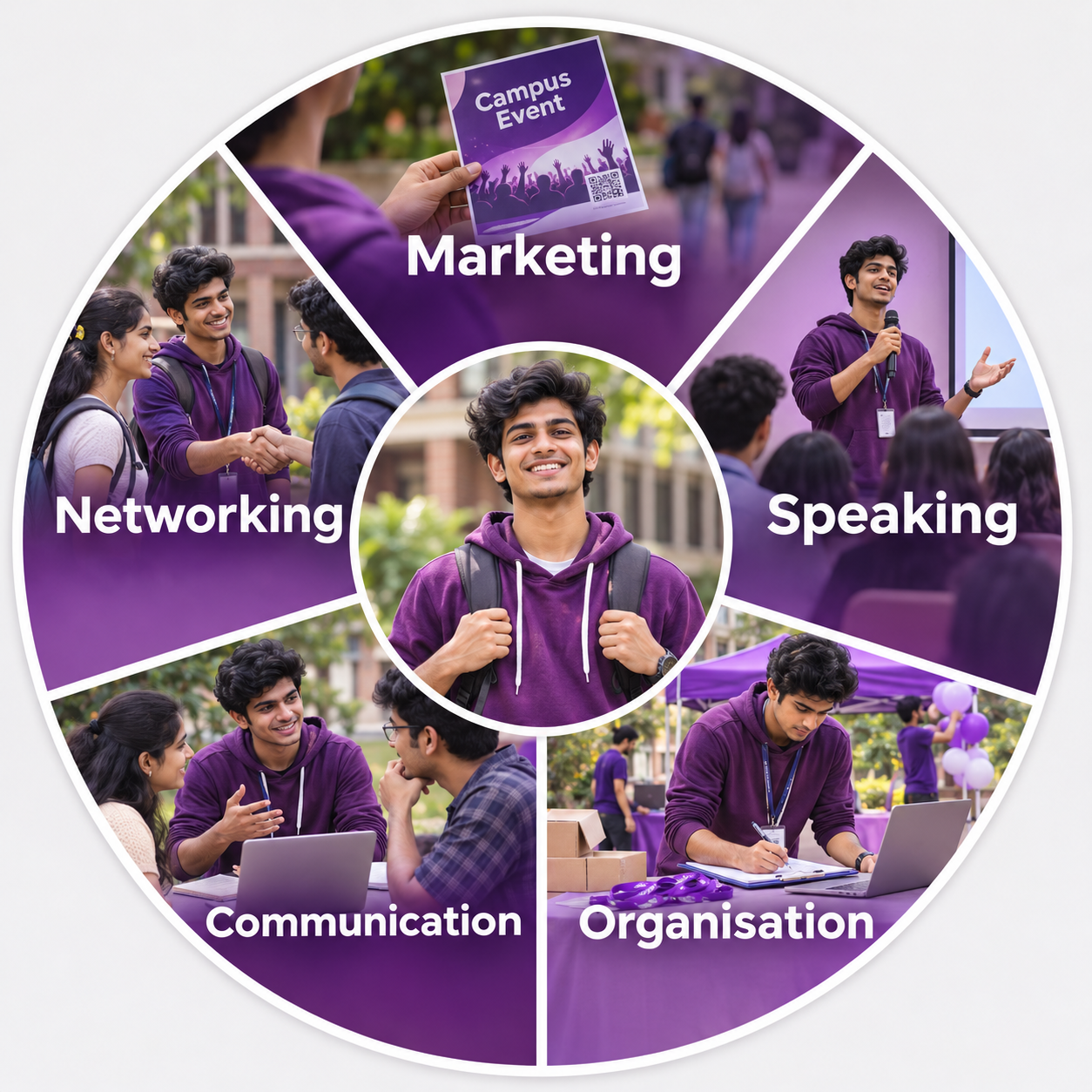
The underrated part of this role is the skill set, because campus ambassador skills are exactly the ones classrooms struggle to teach:
Marketing in the real world. You learn what makes people register, click, and show up - not from a textbook, but from watching your own posts succeed and flop. Many ambassadors run their first funnel, their first poster campaign, and their first event promotion before their second year ends.
Public speaking without a stage fright tax. Classroom announcements, orientation pitches, and info sessions give you dozens of low-stakes reps. The same muscle carries your seminars and interviews later - our presentation guide pairs well with this role.
Organisation and follow-through. Juggling classes with campaign deadlines, coordinating volunteers, and reporting results builds the project management habit employers keep asking freshers to prove.
Professional communication. Writing to company managers, negotiating with college authorities for permissions, and handling classmates' complaints - three very different audiences, one semester of practice.
Networking that compounds. You get direct access to company teams, fellow ambassadors across colleges, and every speaker or organiser who visits your campus. These student ambassador skills and contacts outlast the program itself.
Campus Ambassador Benefits: What You Get Beyond the Title
The practical campus ambassador benefits vary by program, but the strong ones consistently offer:
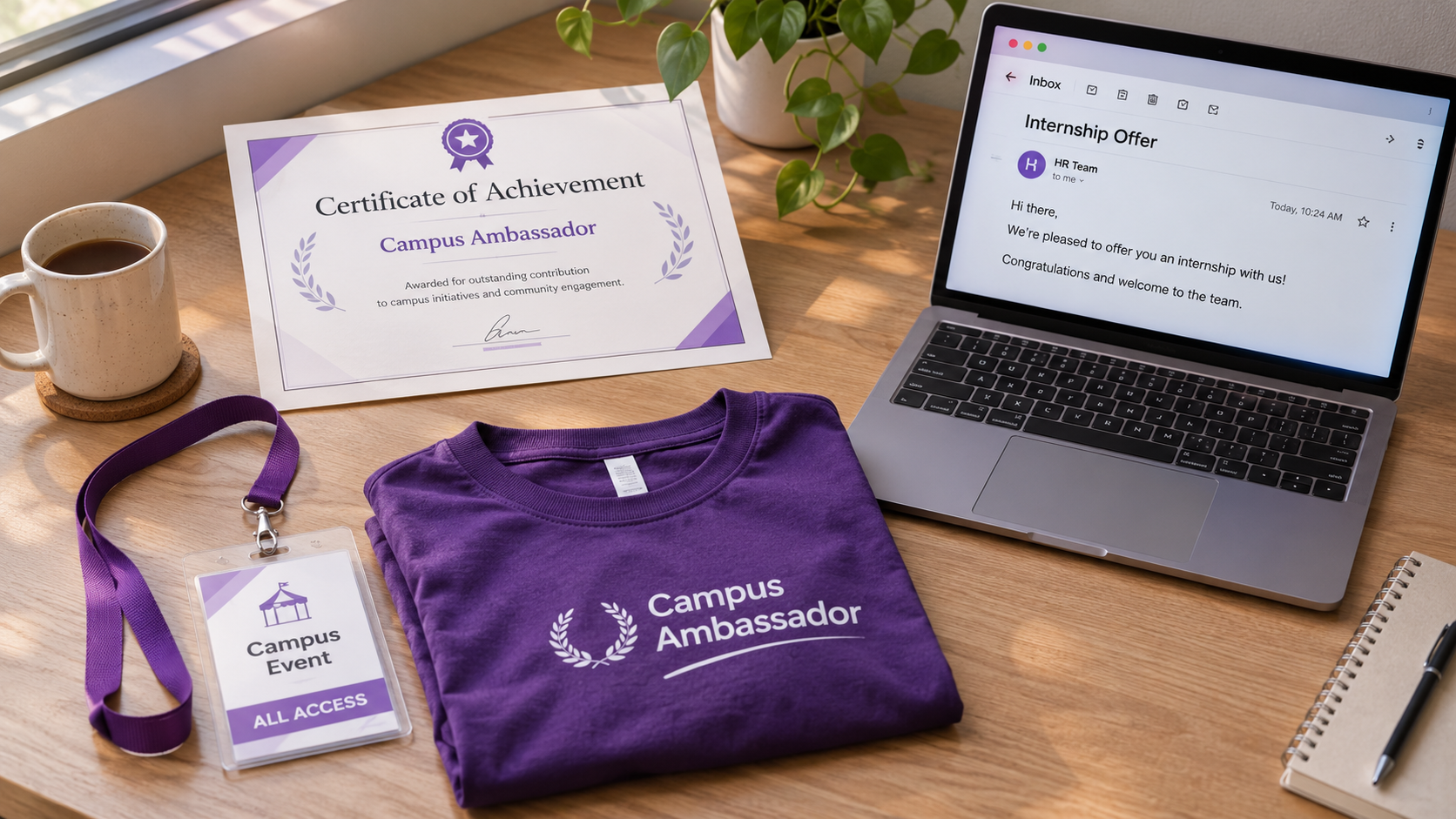
Certificates and letters that mean something. A completion certificate plus - from good programs - a personalised recommendation letter describing what you actually achieved.
Goodies, access, and sometimes stipends. Event passes, merchandise, course access, and performance-based rewards. Some programs pay stipends or commissions; many compensate in kind. Know which type you are joining before you start.
Early doors into the company. Top-performing ambassadors regularly receive internship offers from the brand they represent - the company has already watched you work for months, which beats any resume screening.
A ready-made leadership story. "Led a 15-member volunteer team and brought 300 registrations" is the kind of line fresher interviews are built on - concrete, measurable, and verifiable.
The campus ambassador experience itself. Running something real - with targets, setbacks, and results - while still in college is the closest thing to a work trial most students get before their first internship.
The honest caveat: these benefits go to active ambassadors. Programs reward outcomes, and the title alone - collected and abandoned in two weeks - adds nothing anywhere.
How to Become a Campus Ambassador: The Application Playbook
Now the main question. The process of how to become a campus ambassador is refreshingly beginner-friendly - most programs want enthusiasm and reach more than experience.
The playbook:
Pick brands you genuinely use. Your promotion only works when it is honest. An edtech platform you actually learned from, an event platform you actually browse - authenticity is the whole value you bring.
Find open programs systematically. Companies announce ambassador intakes on their websites, on LinkedIn, and through event platforms. Browsing trending campus opportunities on All College Event puts ambassador calls, contests, and campus drives in one feed instead of twenty scattered pages.
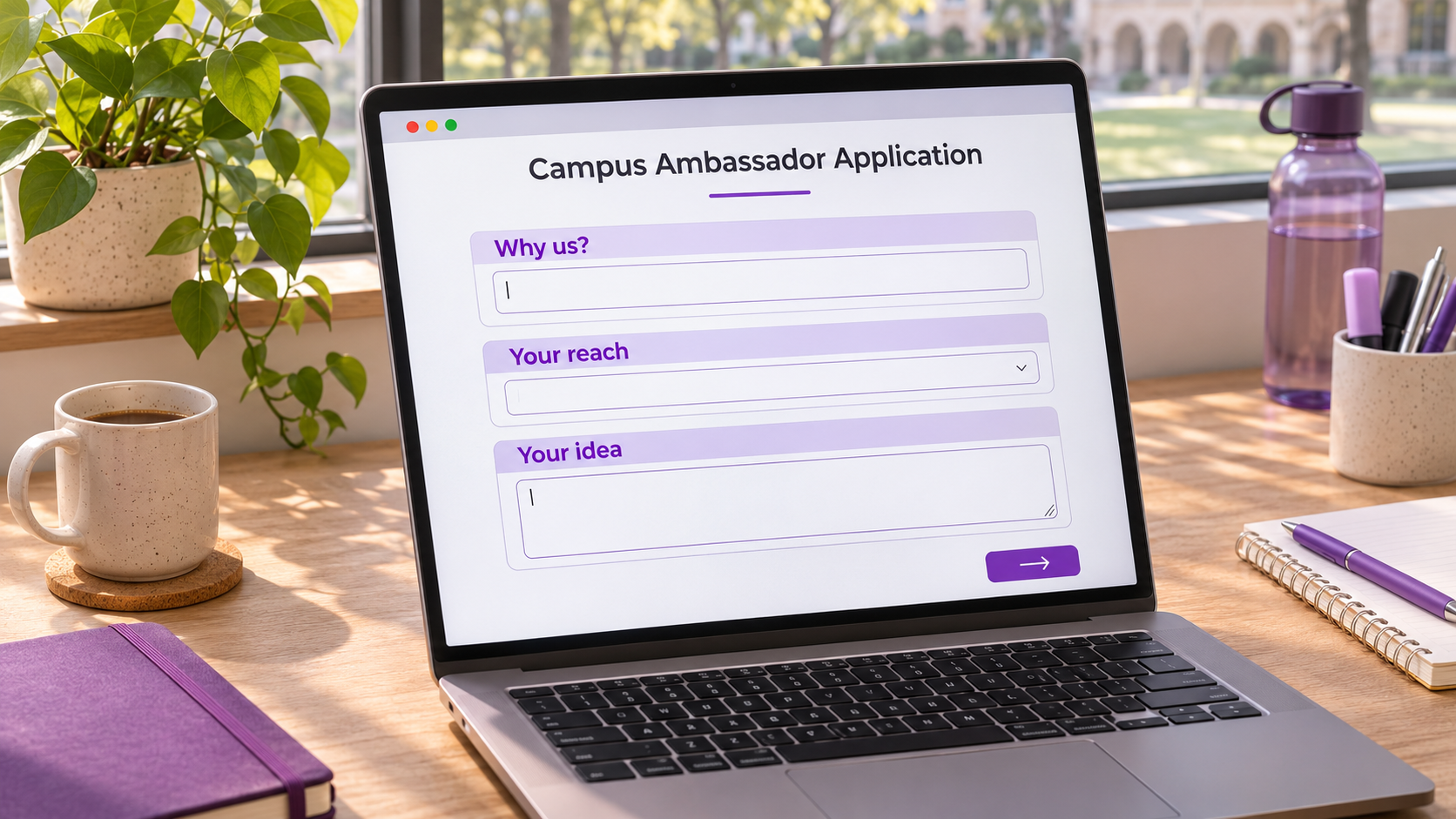
Prepare the application basics. Most campus ambassador application forms ask three things: why this brand, what reach you have on campus, and one idea you would execute. Prepare a short answer for each before you open any form.
Show reach honestly, however small. A class group you admin, a club role, a society membership, or an active LinkedIn presence all count. Numbers help, but a specific plan ("I can present this at our department's fresher orientation in July") beats inflated follower counts.
Expect a short interview or task. Serious programs often ask for a quick call or a sample task - a mock post, a mini campaign plan. Treat it like the real work, because it is.
Start with one program, not five. One role done visibly well earns the recommendation letter and the internship offer. Three logos collected simultaneously usually earn nothing from any of them.
Campus Ambassador Career Impact: The Long Game
A semester of posters and events - does it really matter five years later?
The campus ambassador career impact shows up in four places:
Resume value that survives screening. The campus ambassador resume value comes from outcomes, not the title. "Campus Ambassador, XYZ" is wallpaper; "Grew campus community from 0 to 400 members, organised 6 events, top-10 ambassador nationally" is an interview invitation. Write the numbers down while the program runs - you will not remember them later.
A marketing and leadership track record before graduation. For students aiming at marketing, community, operations, or founder paths, this role is the earliest portfolio entry available - real campaigns with real results.
References who have seen you work. The program manager who watched you deliver for six months writes a very different recommendation than a professor who graded your exam. Those references carry into placements and higher studies alike.
A head start on the evidence habit. Everything we preach across this blog - do real work, keep the proof, follow up with people - starts working from your first semester here. Ambassadors who log their results build the same documentation muscle that later powers strong placement files and research profiles.
Paired with an internship in the same field, the combination is hard to beat: the ambassador role proves initiative on campus, the internship proves performance inside a company, and together they answer every "tell me about yourself" a fresher will face.
Finding Campus Ambassador Opportunities (Without the Spam)
Campus ambassador opportunities are everywhere once you know where to look - and which ones to skip:
Edtech and learning platforms run the largest, most structured programs, with training and clear reward ladders.
Startups and event platforms offer smaller programs with more responsibility per ambassador - better for students who want ownership early.
Fests and conferences appoint short-term ambassadors every season - quick cycles, fast proof, and a natural entry into online events and offline fests alike.
Your own campus ecosystem counts too - institutional programs like ACE College give student coordinators the same structured, documented experience inside their own institution.
Filter every option through two questions: will I do defined work someone supervises, and will I have an outcome to show after? Yes to both means apply. Anything else is a referral link with a costume on.
Conclusion
Strip the branding away and the campus ambassador role is a simple trade: a company lends you its name and its platform, and you return reach, events, and feedback.
Students who treat that trade seriously walk away with skills no classroom teaches, references no exam produces, and a resume entry that answers questions before they are asked. Students who collect the title and vanish walk away with a logo on their LinkedIn and nothing underneath it.
You now know how to become a campus ambassador - the programs to target, the application that stands out, and the outcomes worth building. The role is one of the few opportunities on campus with almost no entry barrier and almost unlimited room to over-deliver.
So, which brand on your campus would you genuinely enjoy representing - and what is stopping you from applying this week?
Ready to Join Your Next College Fest?
Discover upcoming technical, cultural, sports and workshop events near you.
Explore Events Now