
Somewhere in your inbox, there is probably an email you ignored. A journal asking you to review a manuscript. A college inviting you to judge its project expo. A conference asking if you would chair a session. You skipped it because you were busy, and nobody told you that email was worth anything.
This is the part nobody tells young researchers: those small invitations are immigration evidence. One of the ten EB-1A evidence criteria is "judging the work of others," and immigration attorneys consistently call it the most buildable criterion on the entire list. You do not need a Nobel Prize to review a paper. You do not need twenty years of experience to judge a hackathon. You need to be invited, to do the work, and to keep the proof.
But not every role counts the same way. A reviewer, a judge, an invited speaker, and a session chair all sound impressive on a CV, yet USCIS treats them very differently. Some map directly to the EB-1 judging criteria. Others support a completely different criterion. A few add almost nothing unless documented the right way.
This guide breaks down each role - what it proves, what evidence to save, and how to start collecting these invitations years before you ever file a petition.
So, before reading further - how many review or judging invitations have you deleted without replying?

Somewhere in your inbox, there is probably an email you ignored. A journal asking you to review a manuscript. A college inviting you to judge its project expo. A conference asking if you would chair a session. You skipped it because you were busy, and nobody told you that email was worth anything. This is the part nobody tells young researchers: those small invitations are immigration evidence. One of the ten EB-1A evidence criteria is "judging the work of others," and immigration attorneys consistently call it the most buildable criterion on the entire list. You do not need a Nobel Prize to review a paper. You do not need twenty years of experience to judge a hackathon. You need to be invited, to do the work, and to keep the proof. But not every role counts the same way. A reviewer, a judge, an invited speaker, and a session chair all sound impressive on a CV, yet USCIS treats them very differently. Some map directly to the EB-1 judging criteria. Others support a completely different criterion. A few add almost nothing unless documented the right way. This guide breaks down each role - what it proves, what evidence to save, and how to start collecting these invitations years before you ever file a petition. So, before reading further - how many review or judging invitations have you deleted without replying?
A quick refresher for new readers. The EB-1A green card requires you to satisfy at least 3 of 10 criteria set by USCIS (we covered the full list in our earlier EB-1 guide for STEM professionals). Criterion four, in the regulation's own words, asks for evidence of your "participation, either individually or on a panel, as a judge of the work of others in the same or an allied field."
Read that carefully, because every word matters:
"Participation... as a judge" - you must have actually evaluated something. An invitation you never acted on proves nothing.
"The work of others" - grading your own students' regular coursework usually carries little weight; evaluating independent researchers' or professionals' work carries a lot.
"Same or an allied field" - a machine learning researcher judging a data science hackathon fits. The same researcher judging a cooking contest does not.
Why do attorneys love this criterion? Because unlike awards or media coverage, judging the work of others is something you can deliberately pursue. Awards depend on committees. Press coverage depends on journalists. Judging depends mostly on you saying yes to the right invitations - which makes the EB-1 judging criteria the closest thing to a controllable path in the whole petition.
EB-1 Judging Criteria: What USCIS Actually Counts
Not every evaluation activity carries equal weight. This is a practical ranking of how judging activities are generally viewed, from strongest to weakest:
| Activity | Counts toward judging? | Typical strength |
| Peer reviewing for recognised journals | Yes | Very strong - the gold standard |
| Reviewing for conference program committees | Yes | Strong, especially selective conferences |
| Judging national or international competitions and hackathons | Yes | Strong when the event is credible and field-related |
| Serving on thesis or dissertation committees (not your own students) | Yes | Moderate to strong |
| Judging campus-level student expos | Yes, with caveats | Supporting evidence - useful early, weak alone |
| Grading your own class assignments | Rarely | Weak - seen as routine job duty |
Two principles explain the ranking. First, selectivity: USCIS officers ask why YOU were chosen. A journal that selected you for your expertise beats an event that accepts any volunteer. Second, independence: evaluating strangers' work on merit looks like judging; evaluating people you supervise looks like your day job.
And the golden rule of the EB-1 judging criteria: undocumented judging never happened. For every activity, save the invitation email, the completion confirmation or thank-you letter, the event brochure or journal page showing its credibility, and where possible, a count of items you reviewed. Officers cannot verify a memory. They can verify a paper trail.

Peer Reviewer for EB-1: The Gold Standard Route
If you build only one judging activity, make it this one. Serving as a journal reviewer is the clearest, most respected form of judging evidence because the whole system is built on expert evaluation - an editor chose you specifically to assess another researcher's work.
So, how to become a peer reviewer when nobody has invited you yet? The honest answer: reviewers get noticed through their own publications, and editors pick people whose work appears in their journal's field. Practical ways to speed that up:
Publish first, even modestly. Your name in a journal's database is how editors find you. Structured publication support (like guided journal publication programs) can get that first citable paper done.
Register on reviewer platforms. Create an ORCID profile, then sign up on publisher reviewer databases such as Elsevier's Reviewer Hub and the Web of Science reviewer recognition service, listing your exact specialisations.
Email editors directly. A short, professional note to the editor of a journal in your niche - naming your publications and offering to review - works far more often than people expect. Editors are permanently short of good reviewers.
Review for conferences first. Program committees accept earlier-career reviewers, and that experience makes journal editors trust you.
Say yes, then deliver on time. One thorough, punctual review leads to repeat invitations. Serial reviewers often cross 30-50 completed reviews within a few years - a number that looks excellent in a petition.
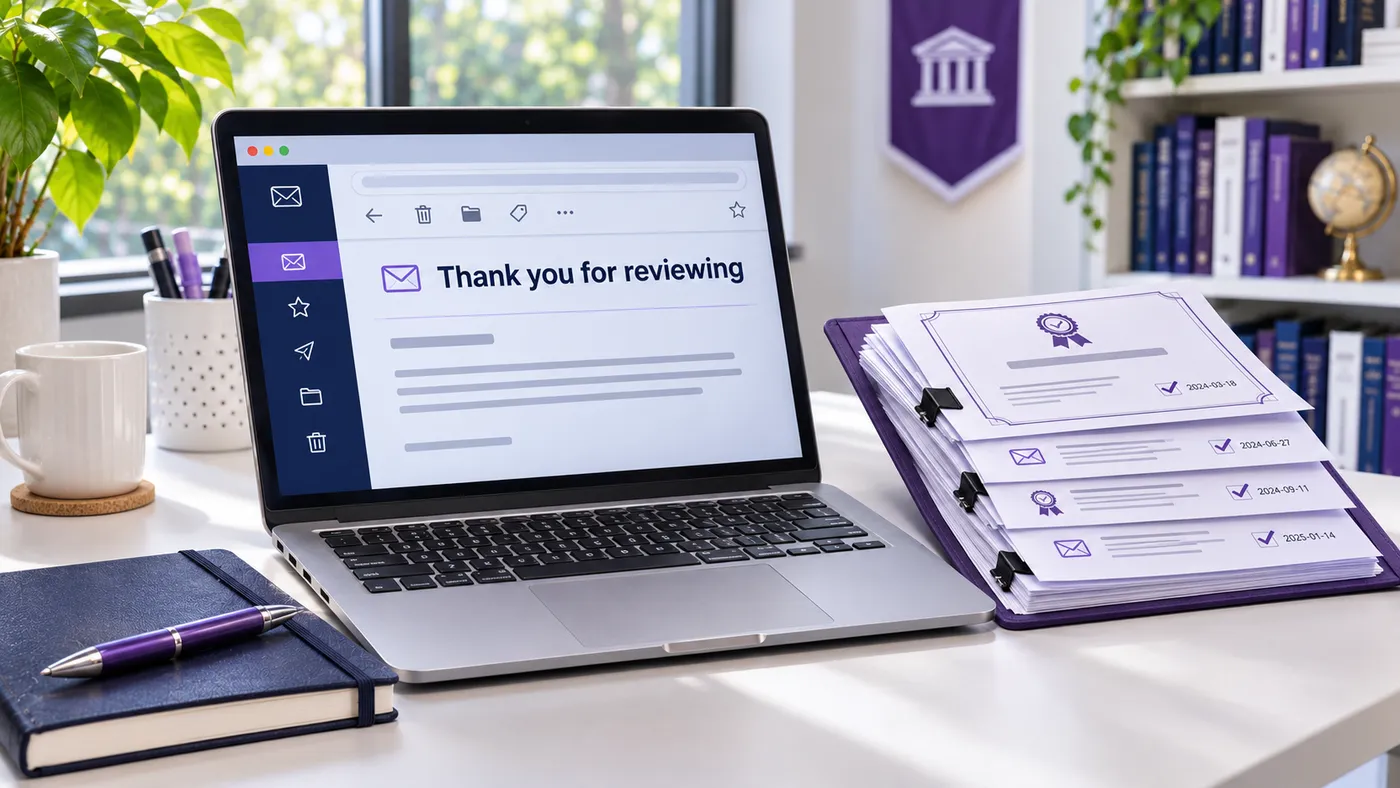
Evidence to save as a peer reviewer for EB-1: every invitation email, every "thank you for your review" confirmation, your reviewer profile pages, and annual reviewer certificates that many journals now issue. A simple spreadsheet - journal, date, manuscript number - turns five years of quiet work into one powerful exhibit.
Conference Speaker EB-1 Evidence: Impressive, But a Different Criterion
This is the twist most people miss. Speaking at conferences is valuable - but it is NOT judging. An invited talk does not evaluate anyone's work, so it cannot satisfy the judging criterion no matter how prestigious the stage.
Where does conference speaker EB-1 evidence actually fit? Mainly in two places:
Original contributions of major significance. Being invited to explain your work signals that the field considers it important. A keynote or invited talk - as opposed to a regular accepted paper presentation - is the strong version of this evidence.
Sustained national or international acclaim. The overall picture of your petition improves when respected bodies keep asking you to speak.
The key word is invited. Invited speaker evidence means the organisers came to you: a keynote, a plenary talk, a panel seat, or a workshop you were asked to lead. Submitting a paper and presenting it yourself is normal academic activity; being sought out is acclaim. When you receive such an invitation, save the email, the event program listing your name, photos of your session, and any honorarium letter - and politely ask organisers for a formal invitation letter on letterhead, which most will happily provide.
So should speakers feel discouraged? Not at all. The smartest strategy treats speaking and judging as partners: the visibility from a strong talk is exactly what triggers judging and review invitations a few months later.
Session Chair at Conferences and Technical Program Committee Roles
Between speaking and reviewing sit two roles that quietly strengthen a petition.
Session chair at conferences. A chair introduces speakers, manages time, and moderates the question round. On its own, chairing is organisational rather than evaluative - so treat it as supporting evidence of standing in your field, not as core judging proof. The exception: when chairs also score presentations or help select a "best paper of the session," that scoring IS judging. If you chair, ask the organisers whether evaluation is part of the role, and get your duties stated in the confirmation letter.
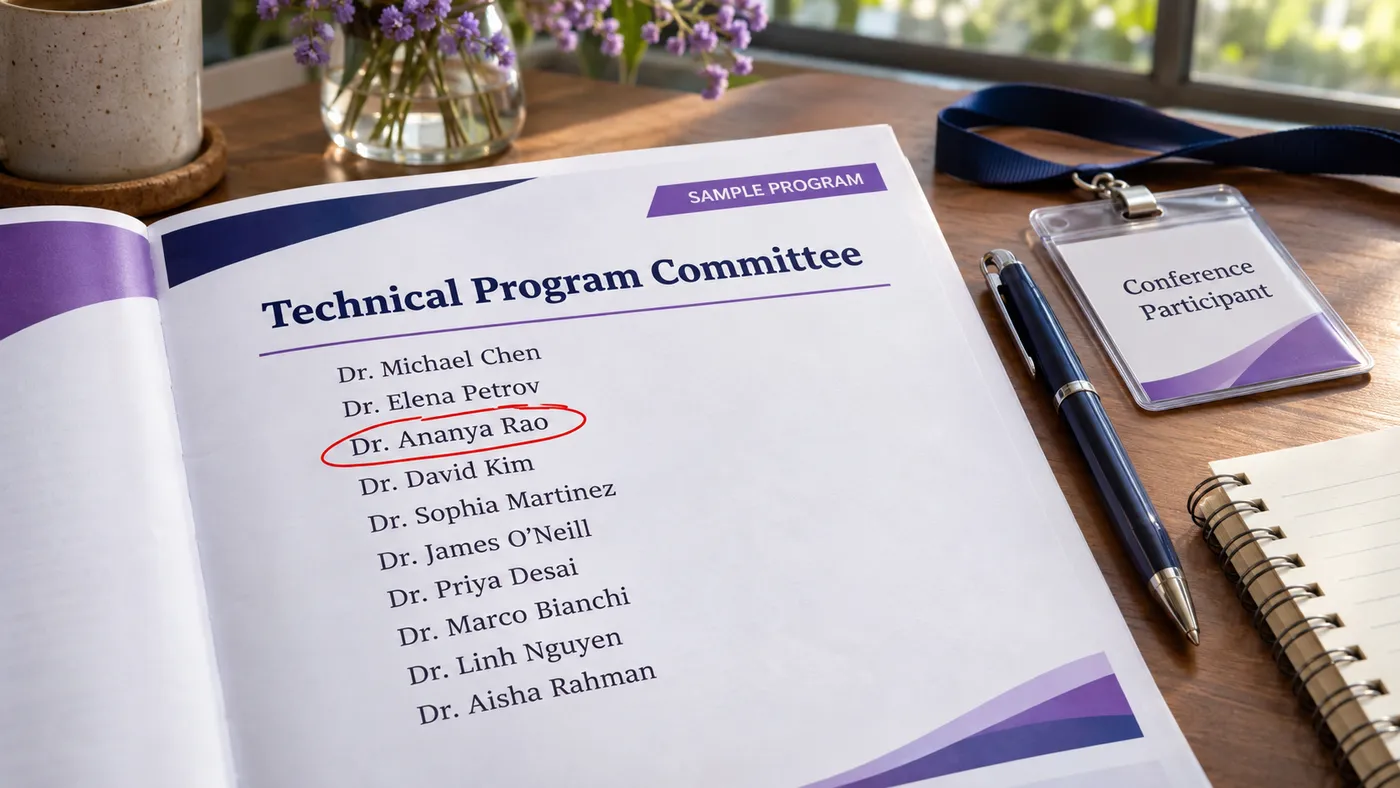
Technical program committee member. This one is heavier than it sounds. A technical program committee member reviews submitted papers, scores them, and decides what enters the conference - which is judging in its purest form, often at scale. TPC membership at a selective conference can involve reviewing 10-20 papers in a single cycle, and the committee page publicly lists your name, giving you independently verifiable evidence. For engineers and computer scientists whose fields publish mainly through conferences, TPC service is often the single strongest judging exhibit available.
Evidence to save for both: the appointment email, the public committee or program page (save a PDF - conference websites disappear), the number of papers you reviewed, and any certificate the organisers issue.
Hackathon Judge Experience: Does It Really Count?
This is the question young professionals ask most, because hackathon judging is the most accessible evaluation role in India today. The answer: yes, hackathon judge experience can count toward the EB-1 judging criteria - with conditions.
What makes a hackathon judging stint strong evidence:
Scale and credibility. A national-level hackathon with hundreds of teams, corporate sponsors, or institutional backing reads very differently from a weekend club event with eight participants.
Field alignment. An AI engineer judging an AI hackathon is evaluating work in their field. The same engineer judging a dance competition is volunteering, not judging professionally.
A real evaluative role. You scored submissions against criteria, deliberated with a panel, and selected winners - and the organisers can confirm it in writing.
Repetition. One hackathon is an anecdote. Judging eight national events across four years is a pattern of being repeatedly sought out - which is exactly what the criterion rewards.
The honest caveat: most attorneys treat hackathon and competition judging as a strong supplement to peer review rather than a full replacement. The ideal judging portfolio mixes both - journal or conference reviews for academic weight, plus competition judging for breadth and volume. Ask every organiser for a judge certificate and a letter describing your evaluative duties, the number of teams you assessed, and why you were selected.
The Verdict: Which Role Wins?
Time to answer the question in the title directly.
For the judging criterion specifically, the reviewer wins. Journal peer review and TPC membership are the two forms of evidence officers recognise instantly.
For your petition as a whole, the combination wins. Speaking builds the reputation that attracts review invitations; judging satisfies criterion four; both together support the "sustained acclaim" story every EB-1A must tell.
The real answer to the title is not choosing one role - it is sequencing all of them, starting with whichever invitation is within reach this semester.
Where to Find These Roles Before Anyone Knows Your Name
Everything above assumes invitations exist. For students and early-career professionals in India, the honest starting problem is simpler: where do the first opportunities come from?
Start on campus, then step outside it. Judge your college's project expo this year, a neighbouring college's symposium next year, and a state-level competition the year after. Browse trending competitions and hackathons to find events in your field actively looking for evaluators and mentors.
Use online events to multiply reach. Virtual conferences and online competitions let you judge or present without travel budgets - and a remote judging stint is documented exactly like a physical one.
Convert presentations into review invitations. Present your work, meet organisers, and tell them you are open to reviewing next edition. Our earlier guide on conference presentations (on the blog) covers how one good talk snowballs into committee roles.
Stop depending on forwarded posters. All College Event was built for exactly this - an AI-driven event intelligence platform whose AI Event Discovery matches your profile with judging, speaking, and presenting opportunities across College Events India. One college events platform, instead of hoping the right WhatsApp group forwards the right flyer.
Institutions have a role here too. Colleges that invite young industry professionals and researchers as judges - through structured programs like ACE College - are not just running better events; they are handing early-career evaluators their first documented judging experience. On a student event platform India's colleges increasingly rely on, every judge certificate issued today is somebody's petition exhibit in 2031.
Ready to Join Your Next College Fest?
Discover upcoming technical, cultural, sports and workshop events near you.
Explore Events Now